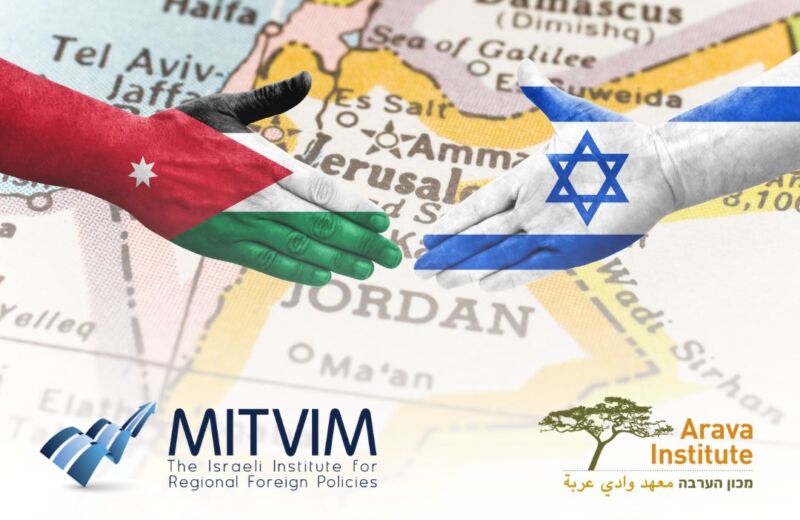

Summary of Mitvim's activities towards mending the relations, August 2011-March 2013
"Spoilers of Peace and the Dilemmas of Conflict Resolution", A Mitvim-Syracuse University...
The rise of political Islam following the Arab Spring has led to concerns in Israel. Many define the regional changes as an "Islamic winter" or an "Iranian winter". However, Prof. Moshe Ma'oz claims that the reality is less one-dimensional, more complex and less threatening. In his paper, Ma'oz analyses the role of political Islam in various Arab countries, and concludes that new Islamist regimes tend to adopt pragmatic, balanced and cautious policy approaches. Ma'oz recommends that Israel deals with the rise of political Islam by assisting the formation of a moderate Sunni coalition, through responding positively to the Arab Peace Initiative and making progress towards peace with the Palestinians.
The Arab Spring reshaped the set of threats that Israel is facing. Rather than fearing the strength of their Arab neighbors, Israelis are now concerned by their weakness. Dr. Ehud Eiran's paper investigates the history of Israel's response to the threat posed to it by the weakness of the Lebanese state since the 1960s, and highlights a number of significant lessons-learned, as Jerusalem faces again the "threat of the weak".
A few springs past the start of the Arab Spring, and the Israeli peace camp's flowerbed has yet to blossom. The Israeli peace organizations had difficulties in connecting regional developments to their agendas. Fear and suspicion in Israel regarding the changing Middle East makes this task even more difficult. In her article, Yael Patir claims that Peace NGOs must find a way to connect with the regional developments and populaces. The article offers various opportunities for peace NGOs to formulate and refine messages, re-examine current perceptions, and create new partnerships.
Mitvim calls to regularly convene think-tanks from the broader Middle East, to discuss implications of the ongoing changes in the region, and to explore and promote paths to security and peace for all in the region. Civil society efforts to promote Israeli-Arab peace are usually of bi-lateral Israeli-Palestinian nature and are mostly carried out through people-to-people activities. Such efforts, while important to maintain, cannot lead to a breakthrough under the current political circumstances.